
Can Retinol Shrink Large Pores
- M BAR
- Jul 6
- 3 min read
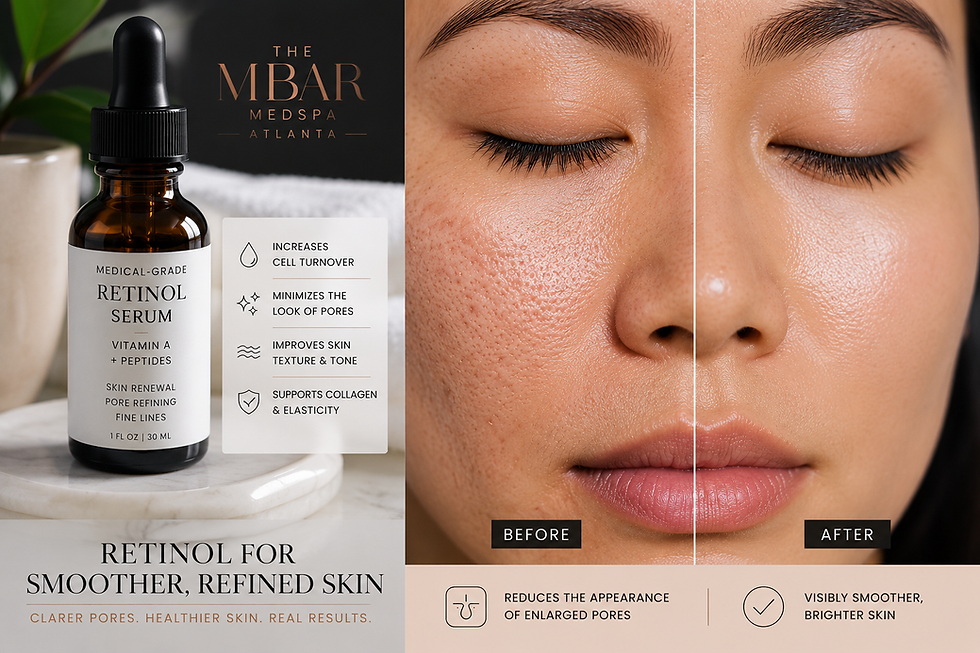
Can Retinol Shrink Large Pores?
If you've been researching skincare ingredients for enlarged pores, you've probably heard about retinol. This popular vitamin A derivative is known for improving fine lines, acne, and skin texture, but can it actually shrink large pores? The short answer is that retinol cannot permanently shrink your pores. However, it can significantly improve their appearance by increasing cell turnover, preventing clogged pores, and supporting collagen production.
At The Mbar Medspa in Atlanta, we often recommend retinol as part of a comprehensive skincare routine for patients concerned about enlarged pores.
Why Do Pores Look Larger? Can Retinol Shrink Large Pores
Pores are natural openings in the skin that release oil (sebum). While genetics largely determine your pore size, several factors can make pores appear larger, including:
Excess oil production
Aging and collagen loss
Sun damage
Acne
Clogged pores
Reduced skin elasticity
When pores become clogged or the surrounding skin loses collagen, they become more noticeable.
What Does Retinol Do?
Retinol is a vitamin A derivative that works by speeding up your skin's natural cell turnover.
Regular use can help:
Prevent clogged pores
Smooth rough skin texture
Improve acne-prone skin
Stimulate collagen production
Reduce fine lines
Improve overall skin tone
Because retinol keeps pores clearer and supports healthier skin, many people notice their pores appear smaller over time.
Can Retinol Permanently Shrink Pores?
No. Pores cannot permanently shrink because their size is primarily determined by genetics.
However, retinol can make pores look smaller by:
Keeping pores free of debris
Improving skin texture
Supporting collagen production
Increasing skin firmness
Consistent use is important, as the benefits develop gradually over several months.
Retinol vs. Microneedling for Large Pores
Both retinol and microneedling can improve enlarged pores, but they work in different ways.
Retinol focuses on improving skin cell turnover and preventing clogged pores.
Microneedling stimulates collagen and elastin production, strengthening the skin surrounding each pore and creating a smoother, firmer appearance. Many patients achieve the best results by combining a professional microneedling treatment series with a medical-grade retinol recommended by their skincare provider.
How to Use Retinol Safely
If you're new to retinol, start slowly.
Helpful tips include:
Apply it at night.
Begin two to three nights per week.
Use a moisturizer if dryness occurs.
Always wear broad-spectrum sunscreen during the day.
Follow your provider's recommendations if you're receiving professional skin treatments.
Avoid using retinol immediately before or after procedures such as microneedling unless your provider instructs you to do so.
When Professional Treatments May Be a Better Option
While retinol is an excellent addition to many skincare routines, professional treatments may produce more noticeable improvements if your enlarged pores are caused by:
Acne scars
Significant collagen loss
Sun damage
Long-standing skin texture concerns
Retinol and Enlarged Pores Treatment in Atlanta
If enlarged pores are keeping you from feeling confident in your skin, the right combination of professional treatments and medical-grade skincare can make a significant difference.
At The Mbar Medspa in Atlanta, we create personalized treatment plans designed to improve enlarged pores, skin texture, and collagen production. Whether you're considering retinol, microneedling, or both, we'll help you choose the approach that's best for your skin and goals. Schedule your consultation today and take the first step toward smoother, healthier-looking skin.
Frequently Asked Questions
Does retinol actually shrink pores?
No. Retinol cannot permanently shrink pores, but it can make them appear smaller by improving skin texture, preventing clogged pores, and stimulating collagen production.
How long does retinol take to improve large pores?
Many people begin noticing smoother skin after 8–12 weeks of consistent use, with continued improvements over several months.
Is retinol good for oily skin?
Yes. Retinol helps regulate skin cell turnover, making it especially beneficial for oily and acne-prone skin that is prone to clogged pores.
Is microneedling better than retinol for enlarged pores?
They serve different purposes. Retinol supports daily skin maintenance, while microneedling provides professional collagen stimulation. Many patients see the best results by combining both treatments under professional guidance.
Can I use retinol after microneedling?
Not immediately. Retinol should be paused before and after microneedling until your skin has healed. Your provider will let you know when it's safe to resume your skincare routine.


Comments