
PCOS and Skin Tags: Why They Happen and How to Remove Them
- M BAR
- Jun 10
- 3 min read
PCOS and Skin Tags: Why They Happen and How to Remove Them
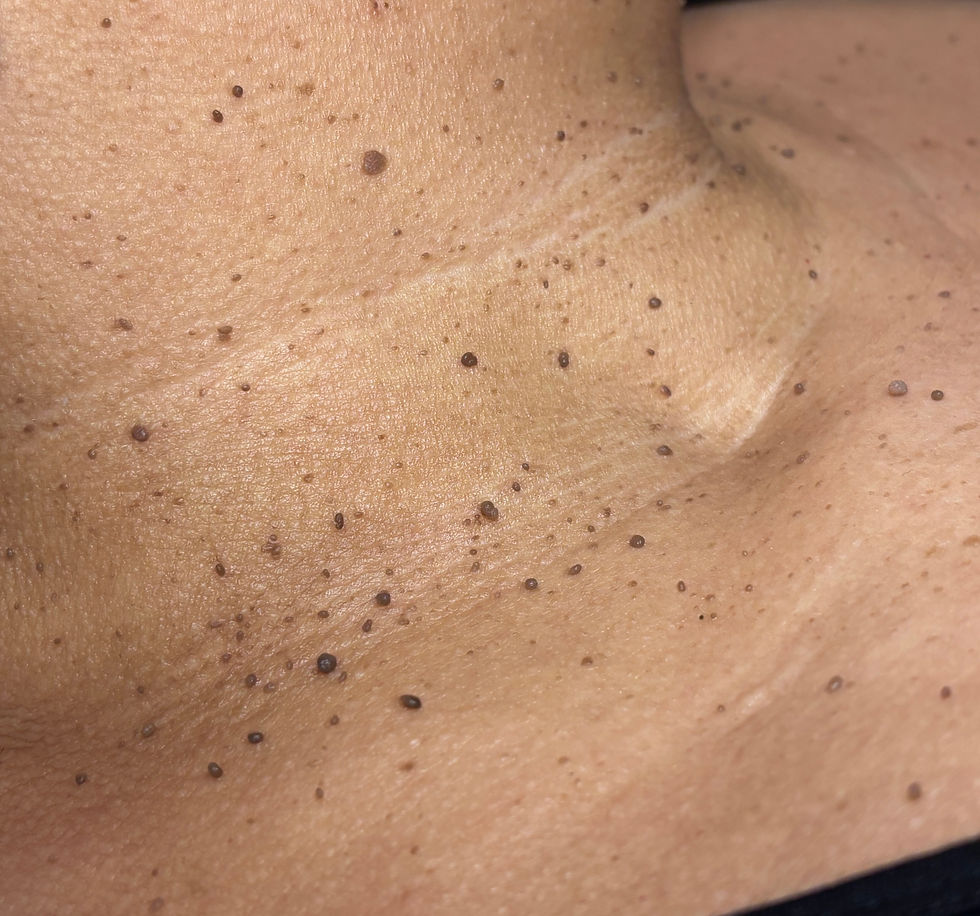
Many women are surprised to learn that skin tags may be associated with Polycystic Ovary Syndrome (PCOS). While skin tags are generally harmless, they can become a frustrating cosmetic concern and may appear more frequently in women experiencing hormonal imbalances. At The Mbar Medspa in Atlanta, we help clients safely remove unwanted skin tags while addressing common skin concerns associated with PCOS and hormonal changes.
What Are Skin Tags?
They are typically:
Flesh-colored or slightly darker
Soft to the touch
Small and painless
Attached by a narrow stalk
Although skin tags are not dangerous, many people choose to have them removed for cosmetic reasons or because they become irritated by clothing, jewelry, or shaving.
Does PCOS Cause Skin Tags?
PCOS does not directly cause skin tags, but women with PCOS are more likely to develop them. Researchers believe the connection may be related to:
Hormonal imbalances
Insulin resistance
Increased skin friction
Metabolic changes associated with PCOS
Where Do PCOS Skin Tags Commonly Appear?
Common locations include:
Neck
Underarms
Eyelids
Groin area
Chest
Under the breasts
Many women first notice multiple skin tags developing around the neck or underarms.
What Is the Connection Between Insulin Resistance and Skin Tags?
Insulin resistance occurs when the body's cells become less responsive to insulin, causing the body to produce higher levels of the hormone. Many healthcare professionals believe elevated insulin levels may contribute to the development of skin tags. Because insulin resistance is commonly associated with PCOS, women with PCOS may notice:
Skin tags
Darkened skin around the neck
Acanthosis nigricans
Weight fluctuations
If you are concerned about symptoms associated with PCOS, it is important to consult your healthcare provider.
Are Skin Tags Dangerous?
However, they may become:
Irritated by clothing
Caught on jewelry
Inflamed from shaving
A cosmetic concern
Most skin tags do not disappear without treatment. While some may shrink over time, many remain the same size or gradually increase in number. Professional removal is often the quickest and most effective solution.
Professional Skin Tag Removal in Atlanta
Professional skin tag removal is a simple treatment designed to safely eliminate unwanted growths. Benefits include:
Fast treatment sessions
Minimal discomfort
Little to no downtime
Immediate cosmetic improvement
Improved confidence
Many patients choose to remove multiple skin tags during a single appointment.
Can Skin Tags Grow Back After Removal?
Once a skin tag is removed, that specific skin tag does not grow back.
However, individuals prone to developing skin tags may experience new skin tags in other areas over time. Maintaining regular skin evaluations can help address new concerns as they appear.
You may be a good candidate if you:
Have unwanted skin tags
Experience irritation from clothing or jewelry
Want smoother-looking skin
Have multiple skin tags around the neck or underarms
Want a professional assessment of your skin concerns
Skin Tag Removal at The Mbar Medspa
At The Mbar Medspa, we provide professional skin tag removal treatments designed to safely address unwanted skin growths and improve the appearance of your skin.
Our goal is to help you feel confident in your skin while providing personalized treatment recommendations based on your individual concerns.
Schedule Your Consultation
If you're struggling with PCOS skin tags, neck skin tags, underarm skin tags, or unwanted skin growths, The Mbar Medspa proudly serves clients throughout Atlanta, Buckhead, Sandy Springs, Dunwoody, Johns Creek, Brookhaven, Alpharetta, Marietta, and surrounding metro Atlanta communities. Schedule your consultation today to learn more about professional skin tag removal and personalized skin treatments.
FAQ
Microneedling stimulates collagen production and may improve the appearance of acne scars caused by hormonal breakouts.
Yes. Repeated inflammation from hormonal acne can lead to post-inflammatory hyperpigmentation and uneven skin tone.
Treatment varies by patient and may include professional skincare treatments, microneedling, laser facials, and guidance from a healthcare provider.


Comments