
Why PCOS Causes Dark Spots and Hyperpigmentation
- M BAR
- Jun 10
- 3 min read

Why PCOS Causes Dark Spots and Hyperpigmentation
If you've noticed stubborn dark spots that remain long after your acne has healed, you're not alone. Many women with Polycystic Ovary Syndrome (PCOS) struggle with hyperpigmentation, uneven skin tone, and lingering acne marks that can take months to fade. At The Mbar Medspa in Atlanta, we frequently help clients improve the appearance of post-inflammatory hyperpigmentation, acne scars, and discoloration associated with hormonal acne and PCOS.
What Is Hyperpigmentation?
Hyperpigmentation occurs when the skin produces excess melanin in response to inflammation, injury, or irritation.
This excess pigment can appear as:
Brown spots
Dark patches
Uneven skin tone
Discoloration after breakouts
For many women with PCOS, hyperpigmentation becomes a frustrating reminder of past acne flare-ups.
Why Does PCOS Cause Hyperpigmentation?
Women with PCOS often experience:
Recurring hormonal acne
Chronic inflammation
Repeated breakouts in the same areas
Increased skin irritation
Each breakout creates inflammation within the skin. As the skin heals, excess melanin may be produced, leaving behind visible dark marks known as post-inflammatory hyperpigmentation.
What Is Post-Inflammatory Hyperpigmentation?
Post-inflammatory hyperpigmentation (PIH) develops when the skin responds to inflammation by producing additional pigment.
Common causes include:
Hormonal acne
Picking at blemishes
Cystic acne
Skin irritation
Inflammatory skin conditions
Unlike acne scars, hyperpigmentation affects skin color rather than skin texture.
Women with PCOS frequently notice pigmentation on the:
Chin
Jawline
Lower cheeks
Neck
Forehead
These areas often correspond with hormonal acne flare-ups.
Can PCOS Cause Darkening Around the Neck?
Yes. Some women with PCOS may develop darker skin around the neck, underarms, or other body folds. This condition is known as acanthosis nigricans and is often associated with insulin resistance. Because PCOS and insulin resistance commonly occur together, this type of pigmentation is frequently seen in women with PCOS.
How Long Does PCOS Hyperpigmentation Last?
The timeline varies depending on:
Skin type
Severity of inflammation
Sun exposure
Skincare routine
Professional treatments
Without treatment, some dark spots may take several months or longer to fade.
Best Treatments for PCOS Hyperpigmentation
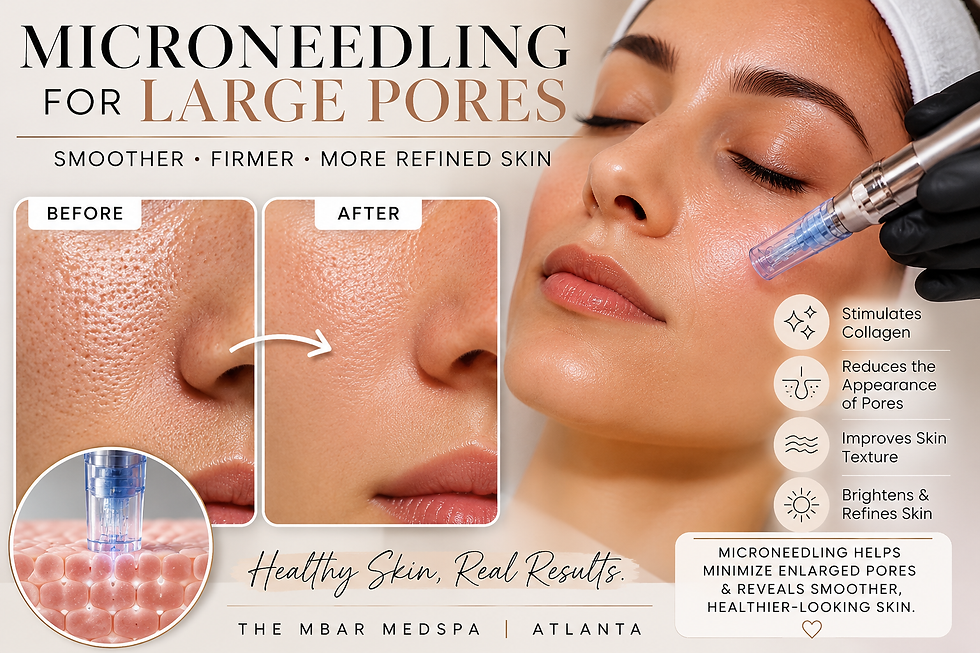
Microneedling
Improved skin texture
Brighter complexion
Reduced appearance of acne marks
Improved overall skin tone
Laser Facial Treatments
Uneven pigmentation
Acne-related discoloration
Skin clarity
Overall skin brightness
Professional Skincare
A customized skincare routine may help support:
Brighter skin tone
Reduced inflammation
Improved healing
Prevention of future pigmentation
Can Hyperpigmentation Be Prevented?
Avoid picking at blemishes
Wear sunscreen daily
Treat acne early
Follow a consistent skincare routine
Seek professional treatment when breakouts become persistent
PCOS Hyperpigmentation Treatment in Atlanta
At The Mbar Medspa, we provide customized treatment plans designed to improve the appearance of acne scars, hyperpigmentation, and uneven skin tone caused by hormonal acne and PCOS. Whether you're struggling with dark spots from past breakouts or active hormonal acne, we can help you create a treatment plan tailored to your skin goals.
Schedule Your Consultation
If you're struggling with PCOS hyperpigmentation, dark spots, or hormonal acne, The Mbar Medspa proudly serves clients throughout Atlanta, Buckhead, Sandy Springs, Dunwoody, Johns Creek, Brookhaven, Alpharetta, and surrounding metro Atlanta communities. Schedule your consultation today to learn how microneedling, laser facials, and advanced skin treatments can help restore a brighter, more even complexion. ✨
FAQ
Microneedling stimulates collagen production and may improve the appearance of acne scars caused by hormonal breakouts.
Yes. Repeated inflammation from hormonal acne can lead to post-inflammatory hyperpigmentation and uneven skin tone.
Treatment varies by patient and may include professional skincare treatments, microneedling, laser facials, and guidance from a healthcare provider.
Comments